
Heads up: this post contains affiliate links. If you buy through my link I earn a small commission at no extra cost to you. I only recommend products I genuinely love!
Here’s an unpopular opinion: if you actually see a bear on a hike, consider yourself fortunate. Hiking in bear country means sharing the woods with an animal that, statistically, wants absolutely nothing to do with you. But “statistically safe” doesn’t mean “prepare for nothing.” Let’s talk about what actually matters when you’re out there: the gear, the myths, and the plan you need before the trail hands you a bear encounter instead of a bear sighting.
Black Bear vs. Grizzly vs. Brown Bear: Who You’ll Actually Meet Hiking in Bear Country
First, the mix-up I hear constantly: grizzly bears and brown bears are not two different species. They’re both Ursus arctos. “Brown bear” usually refers to coastal populations (think Kodiak bears) that gorge on salmon and grow enormous. “Grizzly” is the name we use for the same species living inland: the Yellowstone and Glacier ecosystem bears, the ones in the Rockies. Same animal, different zip code and diet.
Here in Minnesota, none of that matters for your actual hike, because we only have black bears. No grizzlies, no brown bears, period. Grizzlies live in Alaska, western Canada, and small pockets of the northern Rockies, an estimated 1,000 or so in the lower 48 states. Black bears, meanwhile, are found in at least 40 U.S. states and number around 900,000 in North America. If you’re hiking the Superior Hiking Trail or in the BWCA, black bear is the only bear you need to know.
Telling them apart, if you ever do end up out West: black bears run 130–500 pounds, have a flat back with no shoulder hump, and a straighter snout. Grizzlies are bigger, 400–1,500 pounds, with a distinct shoulder hump, a dished (concave) face, and longer, straighter claws built for digging instead of climbing.

Bear Attack Statistics: How Rare Is a Bear Attack While Hiking in Bear Country?
Since 1784, there have been roughly 180 fatal bear attacks across all of North America. That’s well under one fatality per year, continent-wide. Let that sink in for a second.
Black bears specifically: 66 fatal attacks since 1974, and only 24 of those in the last 20 years (2003–2023). That works out to about 1.2 fatal black bear attacks per year across the entire continent. Fewer than a dozen non-fatal attacks get reported annually, out of a population near 900,000 animals. Most black bear encounters end with the bear leaving. They are, by nature, shy.
Grizzlies are a different math problem. There have been 82 fatal grizzly attacks since 1974. More recent data (2000 to 2015) shows about 183 total grizzly attacks across North America, roughly 12 a year, with 21 of those fatal in the U.S. during that stretch. So a grizzly attack is more likely to be serious than a black bear attack. But you also have to actually be in grizzly country to have one. Over half of grizzly attacks happen during hiking or camping, most often when someone surprises a female with cubs.
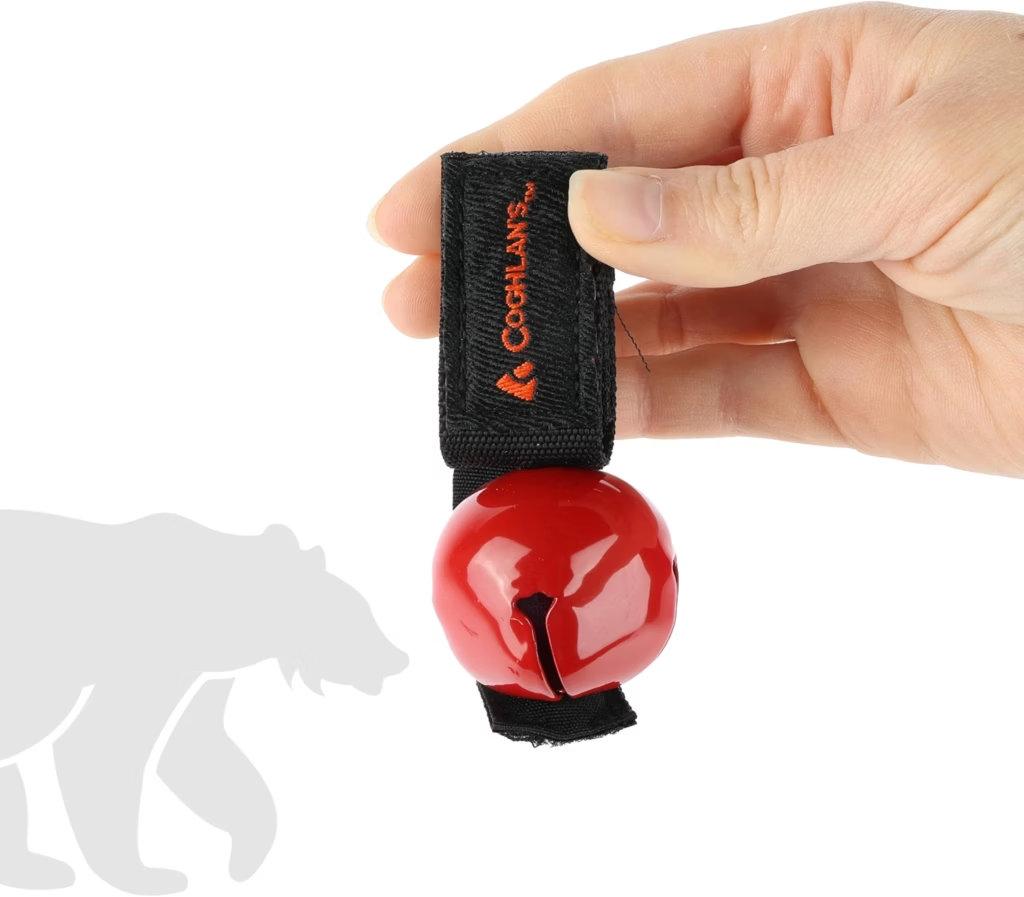
Bear Bells: Do They Actually Work? (The Jury’s Still Out)
I don’t use bear bells, and neither do most of the hikers I know. And can we be honest? I think people wearing them get side-eyed by other hikers a little. Of course, I would never personally judge anyone wearing one! But the research on whether they actually do anything is genuinely mixed, which is exactly why I don’t bother.
A frequently cited 1999 study out of the University of Calgary found that hikers wearing bells were never charged by a bear in the sample, while 14% of hikers without bells were charged. Sounds like a win for bells. Except the same study found bears actually moved away from hikers less often when bells were involved (67% of the time) compared to hikers without bells (74% of the time). That’s a small, confusing dataset, and it’s decades old.
USGS bear biologist Tom Smith tested bells at Katmai National Park and found bears essentially ignored the jingling. They didn’t respond to it at all, though they did react to other human sounds like a snapping twig. The National Park Service agrees: your bell probably won’t be heard until you’re already too close for it to help. Yelling or clapping is more effective at giving a bear the heads-up it actually needs.
My take: skip the bell, use your voice. It’s free, and it actually works.
Bear Spray and Handguns: What I Actually Carry
I don’t carry bear spray in Minnesota, but I do carry it out West.
That’s not me being inconsistent. It’s proportionate to the actual risk. Bear spray exists primarily because of grizzlies. The National Park Service is blunt about this: it calls bear spray “a highly effective tool for stopping or deterring attacks,” easier to use under stress than a firearm. Here’s the part people don’t think about: it’s genuinely hard to hit a charging bear with a gun.
Which brings me to handguns. I don’t carry one for bears: they’re heavy, and I don’t practice shooting enough to be proficient under pressure. Realistically, anything I’d carry on a long trail day isn’t a high enough caliber to reliably stop a bear. I’d just make it mad. An injured, angry bear is a worse problem than the one you started with.
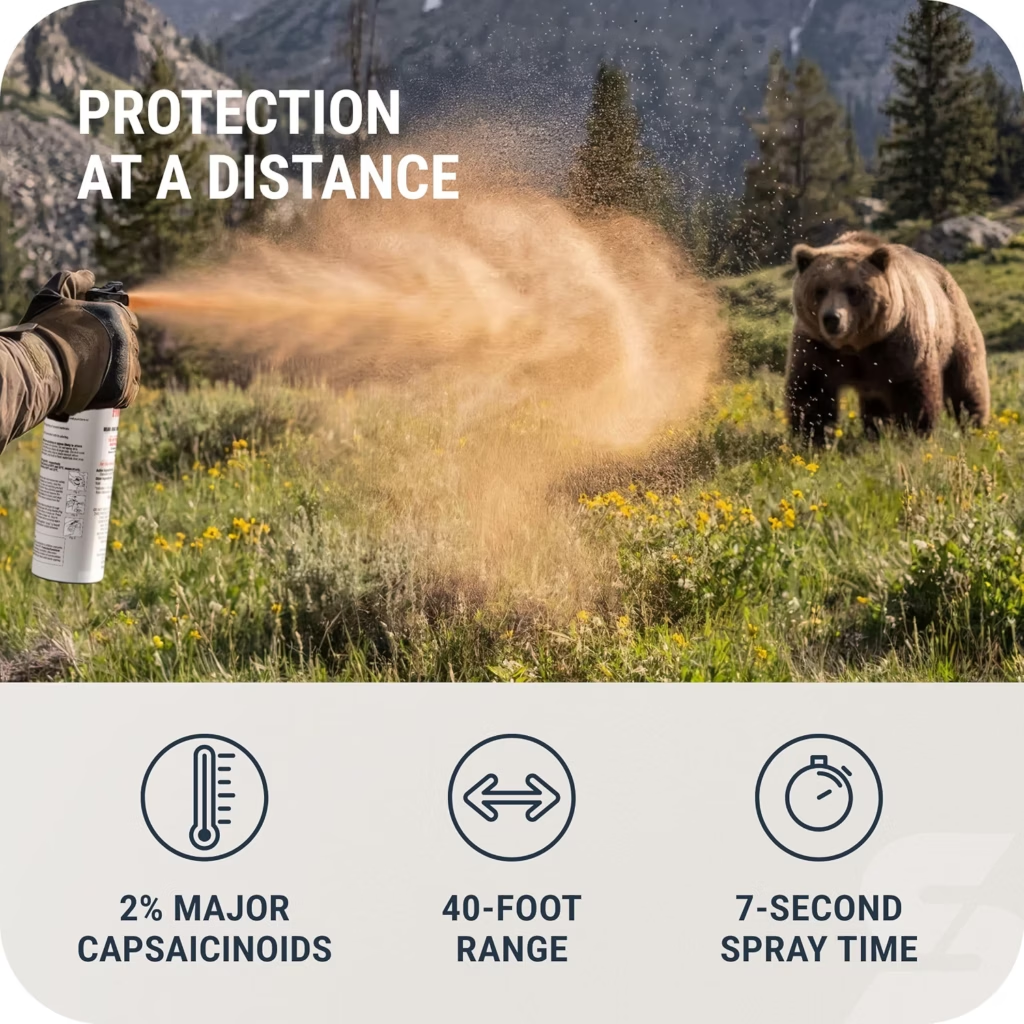
Do yourself a favor: before you head into grizzly country, buy two canisters of bear spray and practice with one of them. Get comfortable pulling it from the holster, popping the safety tab, and firing, so it’s second nature if you ever need it for real. I had a friend who got a little overzealous during a real bear encounter and walked right into his own spray cloud. Don’t do that, check the wind first.
Minnesota’s Bear Law: What Happens If You Ever Have to Defend Yourself
And here in Minnesota, (or anywhere else for that matter) “just shoot it” isn’t actually a legal free pass. The DNR is specific: you can only legally kill a bear outside of hunting season if it’s causing significant property damage or creating an immediate danger to people or animals. A bear knocking over your bird feeder or getting into unsecured trash does not count. Before it comes to that, you’re supposed to contact your DNR Area Wildlife Manager to talk it through first. That conversation covers whether you’ve taken reasonable precautions and whether lethal action is truly the only option left.
If you do end up shooting a bear in self-defense, the DNR requires you to report it to a conservation officer within 48 hours through its TIP Line (800-652-9093). And one more thing that surprises people: you don’t get to keep it. Bears are legally the property of the State of Minnesota, even the one in your backyard.
What to Do If You Encounter a Bear
Spot a bear before it notices you, or before it’s a problem? Back away slowly. Avoid direct eye contact. Speak in a calm, low voice so it knows you’re human, not prey. Pick up kids or small pets immediately. Never run. That can trigger a chase response in an animal faster than you. And never climb a tree. Both black bears and grizzlies can climb.
What to Do If a Bear Charges (Besides Panic and Question Every Life Choice That Got You Here)
Most bear charges are bluff charges, a warning, not a commitment. Stand your ground. Don’t run. Keep talking in that same calm voice, and once the bear stops and backs off, retreat slowly. Running turns a bluff into a chase.
What to Do If a Bear Actually Makes Contact
This is where black bears and grizzlies split, and it matters that you know which one you’re dealing with:
- Black bear: Fight back with everything you have. Punch, kick, use rocks, use bear spray, use anything within reach. Never play dead with a black bear.
- Grizzly or brown bear: Play dead. Cover your head and neck, lie flat on your stomach, and spread your legs so you can’t easily be flipped over. Do not fight back. This typically worsens a defensive grizzly attack. The one exception: if the attack keeps going and turns predatory rather than defensive, fight back regardless of species. A predatory attack (rare, but real) doesn’t stop just because you’re staying still.
Always report any bear encounter, charge, or attack to park or land management authorities afterward.
Precautions for Hiking in Bear Country
- Hike with a partner (or two). Yellowstone’s official backcountry recommendation is groups of at least three people.
- Make human noise. Especially on blind corners, at hill crests, in thick vegetation, and near streams or rushing water, anywhere sound or sightlines are limited, and in windy conditions when a bear may not hear or smell you coming.
- Stay together. A scattered group is a series of solo hikers, which defeats the whole point.
- Don’t hike with earbuds in. You need your ears.
- Carry bear spray where it makes sense (translation: out West, not necessarily here in Minnesota).
- Get your food storage right at camp. This is the one people skip, and it’s the one that actually matters most for keeping a curious bear from becoming a habituated one.
Bear Canisters: Why I’ll Never Backpack Without My Ursack Again
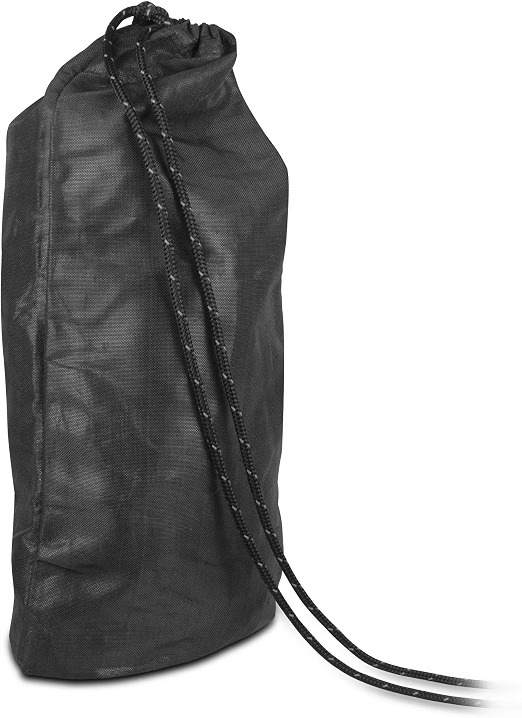
I’ve used an Ursack combined with a 12” x 20” LokSak since they first came out. I will never willingly go back to a hard-sided canister unless I’m hiking somewhere Ursacks aren’t approved. More than one canister-loyal friend has converted, too, and every single one of them loves their Ursack now. The single biggest reason: you don’t have to do a real bear hang. No perfect branch, no rock-and-rope throw that takes four tries, no counterbalance system at 9 p.m. in the rain.
Here’s how an Ursack/LokSak combination actually gets used: first, put your food, garbage, and toiletries in the LokSak and seal it tight. Insert the full LokSak into the Ursack, then cinch the drawcord closed with the cords crossed in an X pattern threaded through the opposite holes. Tie it off with a double or triple overhand knot so there’s no gap a claw could work into. Secure the bag itself to a tree at least five inches thick. Just not a dead tree, since bears can topple those. Use a figure-8 knot, three stacked half-square knots, or Ursack’s own recommended slip-knot-and-carabiner method, which is the easiest to untie the next morning. That’s it. No perfect branch required.
Ursack Weight, and Where It’s Not Approved
The weight difference is the other reason I’m never going back: an Ursack Major (10-liter capacity) weighs about 7.6 ounces. A hard-sided canister like the BearVault BV450 weighs roughly 33 ounces. That’s about four times heavier, for the same job, sitting in your pack for the entire trip.
The catch, and it’s a real one: Ursacks aren’t approved everywhere. Yosemite and Sequoia & Kings Canyon both explicitly reject the Ursack as a substitute for a hard-sided canister, even though it carries IGBC (Interagency Grizzly Bear Committee) certification. Their own rules require hard canisters specifically. Other high-traffic areas, like parts of the Adirondack High Peaks and the Desolation Wilderness/John Muir Trail corridor, may have similar hard-canister-only requirements. Always check the current rules for wherever you’re actually headed before you assume your Ursack will fly. Park websites and Ursack’s own approval map are the places to look.
Prepared, Not Paranoid
None of this is meant to scare you out of the woods. Hiking in bear country, statistically, is one of the safer things you’ll do all week. Safer than the drive to the trailhead, honestly. But “statistically safe” and “unprepared” shouldn’t be the same sentence. Know your bear, know your gear, and know the plan before you need it. Then get back out there.
What’s your bear encounter story, or are you Team “I’ve Never Seen One and I’m Fine With That”? Tell me in the comments.

Leave a Reply